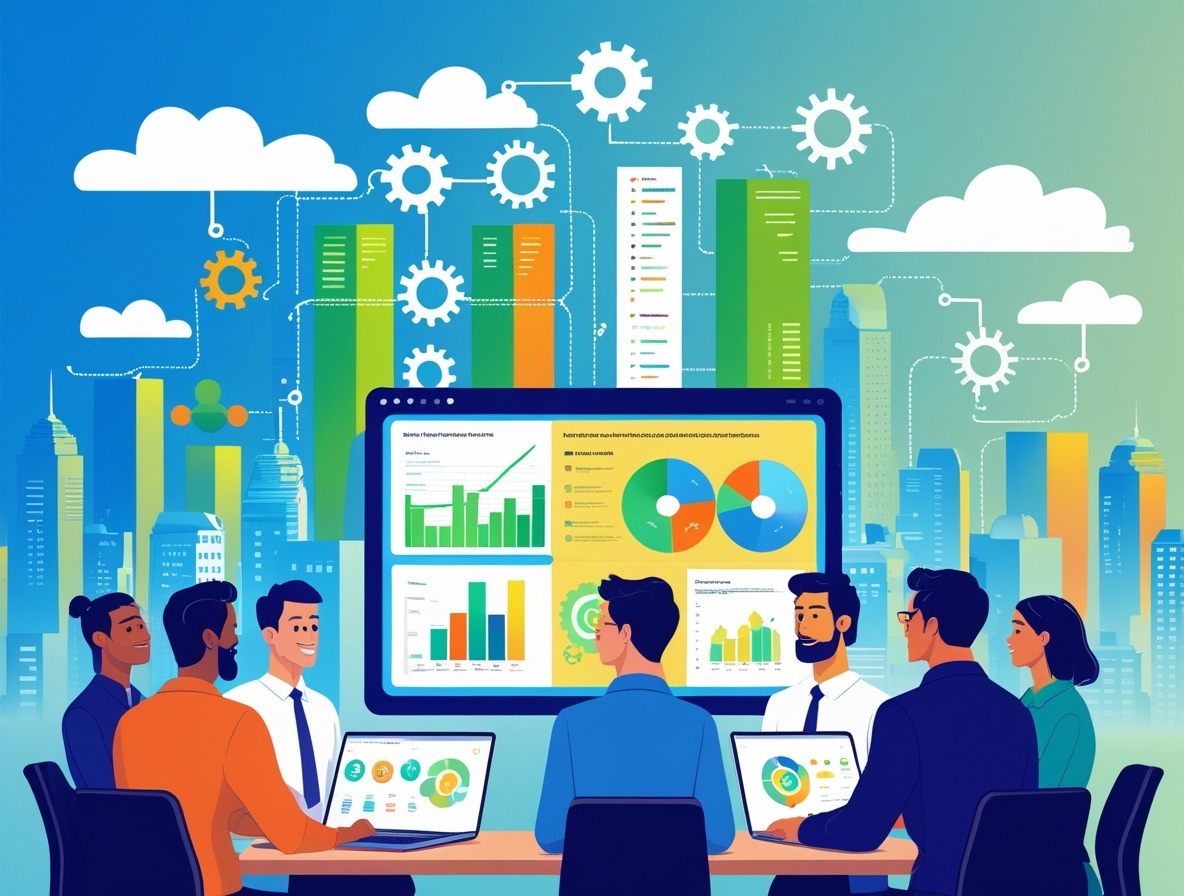
Businesses at this moment induce more information than ever before. before. Client gestures, Client gestures, deal exertions, deal exertions, website visits, mobile apps, detectors, and internal systems all produce large quantities of data every second. This information is precious, but only if it can be stored, managed, and anatomist anatomized duly. This is where data platforms play a critical part.
Data platforms help associations collect, organize process, and dissect data in one unified terrain. Rather than Rather than working with scattered spreadsheets or disconnected tools, businesses can calculate on a structured system that turns raw information into meaningful perceptivity. This perception supports smarter opinions, ameliorate effectiveness, and produces long-term produces long-term competitive advantages.
This composition explains what data platforms are, why they count, how they work, and how real associations use them successfully. The thing is to give clear, practical knowledge that anyone can understand, whether you’re a business proprietor, pupil, marketer, or technology sucker.
Understanding the Concept of Data Platforms
A data platform is a technology foundation that allows businesses to manage data from multiple sources in a centralized way. It combines storehouse, processing, integration, governance, and analytics capabilities into one terrain.
Rather than storing information in insulated systems, data platforms bring everything together. This allows brigades to pierce accurate data, trust its quality, and use it for reporting, soothsaying, and decision-making.
Ultramodern data platforms support both structured data, similar to data, tables and reports, to and unshaped data reports, data, similar as textbook, data, to textbooks, images, and logs. They’re designed to gauge as businesses grow and induce further information.
Why Data Platforms Are Essential for Modern Associations
Data platforms are no longer voluntary tools. They’ve come atom textbooks, become core part of business operations across dial become across diligence. One major reason is the adding speed of decision timber. Companies that act snappily across due snappily, grounded on real perceptivity snappily, perceptivity, frequently outperform their challengers.
Another reason is effectiveness. Without a data platform, brigades spend inordinate time collecting data manually, fixing crimes, and coordinating different performances of the variety. Aperceptivity,variety. centralized variety. a centralized platform reduces this trouble and allows workers to concentrate on advanced value tasks.
Data platforms also ameliorate delicacy and thickness. When everyone works from the same trusted data source, there’s lower confusion and smaller miscalculations. This builds confidence in reports and dashboards used by leadership.
Key Components of Data Platforms
utmocentralisedMostst data platforms are erected using several important factors that work together.
Data Collection and Integration
This element gathers information from multiple sources similMost, such as websites, operations, databases, and external systems. Integration tools ensure that data flows easily into the platform without duplication or loss.
Data Storage
storehouseensureStorehouse systems hold large volumes of information securely. These systems are designed to handle growing data sizes while maintaining performance and trustability.
Data Processing
Processing tools clean, transfigure, and organizeStorehouseorganise data so it can be anatomized and anatomised fluently. This step ensures that raw data becomes usable and meaningful.
Analytics and Reporting
Analytics tools allow users to explore data, identify patterns, and produce reports or dashboards. This is where perceptivity aranatomisedise generated and participated acid participated in ross brigades.
Data Governance and Security
Governance ensures that data is accurate, biddable, and used responsibly. Security features cover sensitive information and control who can pierce specific data.
Types of Data Platforms Used by Businesses

Different associations use different types of data platforms depending on their pretensions and participate in specialized requirements.
- Enterprise data platforms support large scale specialised-scale operations with complex conditions. They’re frequently used by bots-scale bots that manage data across numerous departments.
- poorly grounded data platforms offer inflexibility and scalability. These platforms allow businesses to pay for what they use and pierce data from anywhere.
- Analytics-concentrated platforms emphasise reporting and visualisation. visualisation. They’re popular with marketing, finance, and strategy brigades.
- Assiduity-specific-specific data platforms are designed for sectors similar toto healthcare, finance, or retail. They include features that address assiduity regulations and workflows.
How Data Platforms Ameliorate Decision-Making
The true value of data platforms lies in their capability to ameliorate opinions. When leaders have access to real-time-time and literal data, they can understand what’s passing and why.
For illustration, deal brigades can identify which products perform stylishly in specific regions. Marketing brigades can see which juggernauts drive engagement. Operations brigades can prognosticate force chain issues before they do.
Rather than counting on hypotheticals, opinions are grounded on substantiation. This reduces the threat and increases the likelihood of success.
Case Study One:One: Retail Business Growth Through Data Platforms
A medium-sized retail company plodded along with inconsistent deal reporting. Each store used separate systems, making it delicate to understand overall performance. Leadership frequently entered reports weeks late, limiting their capability to respond to trends.
After enforcing a unified data platform, all store data was consolidated. Deals, force, and client geste we gestures are streamlined daily. directorsgesturesDirectors could view dashboards that showed performance by product and position.
As a result, the company reduced overstock issues, bettered pricing strategies, and increased overall profit within one time. The data platform enabled brisker opinions and better collaboration across brigades.
Case Study Two DirectorsTwo:Healthcare Organization perfectingTwo:Organisation Perfecting Case issuesOrganisation PerfectingIssues
A healthcare provider faced challenges managing case records, appointment data, and treatment issues. Information was stored in multiple systems, leading to detainments and crimes.
By espousing a secure data platform, the association integrated clinical data, cataloguingIssuescataloguing systems, and patient feedback. Croakers and directors gained a comprehensive view of patient peregrinations.
This better opinion is delicacy, reduced delay times, and enhanced patient satisfaction. The data platform also supported compliance with healthcare regulations, erecting trust with cases and controllers.
part of Data Platforms in Digital Transformation
Digital metamorphosis involves using technology to ameliorate processes, services, and client guests. Data platforms are at the centre centres of this metamorphosis.
They enable robotisation by feeding accurate data into digital tools and operations. They support personalisation by assaying client preferences. They also enable invention by furnishing perceptivity that inspires inspires new products and services.
Without a strong data platform, digital enterprises enterprises frequently fail due to poor data quality or lack of integration.
Data Platforms and Business Intelligence
Business intelligence relies heavily on data platforms. Reports, maps, and dashboards are only as good as the data behind them.
A dependable data platform ensures that business intelligence tools work with clean, harmonious information. This allows stakeholders to trust perceptivity and act with confidence.
BrigadesBrigades can track performance pointers, cover pretensions, and estimate issues over time. This supports nonstop enhancement and responsibility.
Challenges Businesses Face When Using Data Platforms
Despite their benefits, data platforms can present challenges if not enforced rightly.
- One challenge is data quality. However, perceptivity will be unreliable if source data is inaccurate or deficient. Strong data governance practices are essential.
- Another challenge is user relinquishment. WorkersWorkers must be trained to use the platform effectively. Without proper training, precious tools may go unused.
- Cost of operation can also be a concern. While data platforms offer scalability, poor planning can lead to gratuitous charges.
Stylish Practices for Successful Data Platform Perpetration
To maximize value, businesses should follow proven stylish practices.
- Clear objectives should be defined before opting for a platform. Knowing what problems you want to solve helps guide opinions.
- Stakeholder involvement is critical. IT brigades, business users, and leadership should unite throughout the process.
- Data governance programmes should be established beforehand. These programmes define data power, quality norms, and access controls.
- Nonstop enhancement is also important. Data platforms should evolve as business needs change.
Unborn Trends in Data Platforms
Data platforms continue to evolve with arising technologies. Artificial intelligence and machine literacy are getting more intertwined, enabling prophetic and conventional analytics.
Real-time data processing is gaining significance as businesses demand brisker perceptivity. Robotisation features are reducing homemade data medication tasks.
Sequestration and security advancements are also a major focus as regulations and client prospects increase.
These trends indicate that data platforms will indeed become more important and accessible in the coming times.
Choosing the Right Data Platform for Your Requirements
Opting for the right data platform requires careful evaluation. Factors similar to scalability, ease of use, integration capabilities, and security should be considered.
Associations should also assess seller trustability, support services, and long-term costs. A platform that aligns with business pretensions will deliver the topmost return on investment.
Testing results through aviators or trials can help ensure the right fit before full perpetration.
Final studies on the value of data platforms
Data platforms have become foundational tools for ultramodern associations. They transfigure raw information into practicable knowledge that drives growth, effectiveness, and invention.
By polarising data, perfecting quality, and enabling advanced analytics, data platforms empower businesses to make informed opinions with confidence. Real-world exemplifications across retail and healthcare show measurable advancements in performance and issues.
As data volumes continue to grow, investing in a strong data platform isn’t just a specialised decision. It’s a strategic move that shapes the future of any association willing to embrace data-driven success.